Origin:
In the 1970s, homeowners in Augusta, Georgia didn’t want to pay taxes on the money they made renting out their homes during the Masters golf tournament. So they lobbied for a tax break—and won.

It takes just a few minutes and provides immediate clarity.


In the 1970s, homeowners in Augusta, Georgia didn’t want to pay taxes on the money they made renting out their homes during the Masters golf tournament. So they lobbied for a tax break—and won.
Congress created Section 280A(g) of the tax code, now famously known as “The Augusta Rule.”
If you rent your personal residence for 14 days or fewer per year, you don’t have to report the income. It’s 100% tax-free.
If you own a business (LLC, S-Corp, etc.), you can rent your home to your company for meetings or events. Your business gets a tax deduction. You personally get tax-free income.
Active User
Satisfaction Rate
Refunds Claimed
Accuracy

Augusta Tax automates all of it—so you can stay audit-proof and save thousands per year, the smart way.
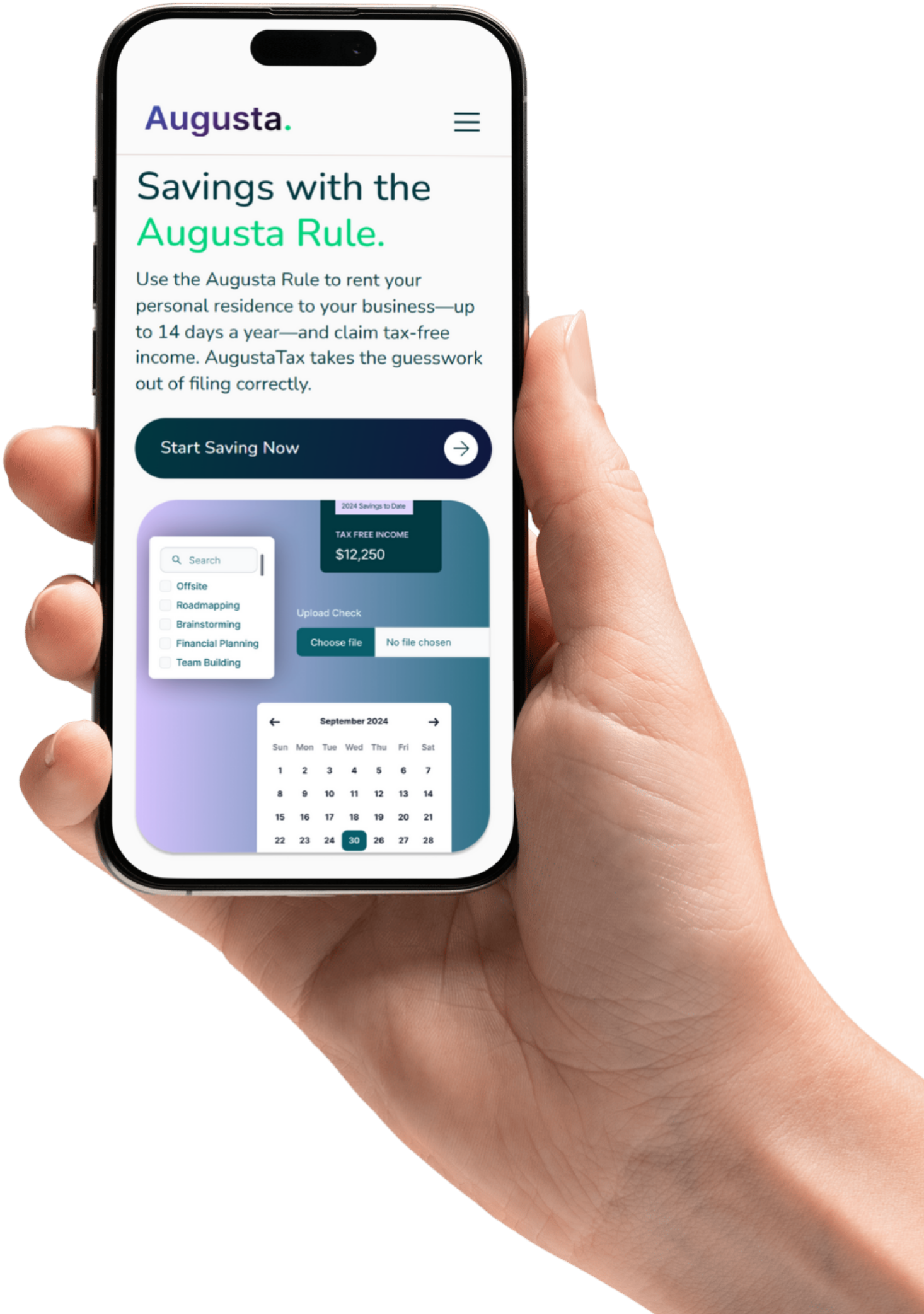
.png)
.png)

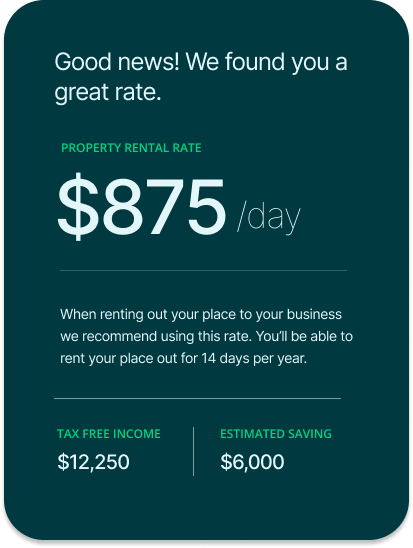

Elias T.
VP of Development

Olivia W.
CEO

Lauren S.
Managing Parnter
Yes, you can potentially benefit from both the home office deduction and the "Augusta Rule" (Section 280A(g) of the Internal Revenue Code), provided you meet the specific requirements for each.
The Augusta Rule allows homeowners to rent out their personal residence for up to 14 days per year without reporting the rental income, provided the home is rented at fair market value and not used as a primary rental property. This provision can be advantageous if, for example, you rent your home to your business for meetings or events. The business can deduct the rental expense, and you, as the homeowner, are not required to report the rental income, resulting in tax-free income. To take advantage, you need to find a comparable venue for or business to rent. But don't worry, we've done all the leg work for you!
The Augusta Rule allows homeowners to rent their personal residence to their business or another party for up to 14 days per year without reporting the income on their tax return. To qualify, the rental must be for business purposes, charged at fair market value, and properly documented. Homeowners must ensure compliance with IRS guidelines and avoid overlapping deductions, like the home office deduction, for the same space.
Let's chat!
